Conceptual Themes
My paintings move through a few recurring lines of inquiry — ways of organizing image, gesture, and narrative suggestion. The groups below aren’t strict series as much as lenses: each one gathers works that share structure, mood, or problem-solving. Together they show how the paintings shift between order and intuition.
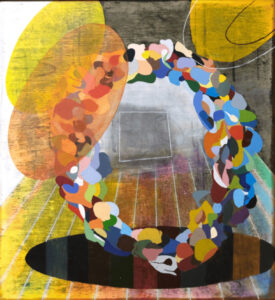
Containment
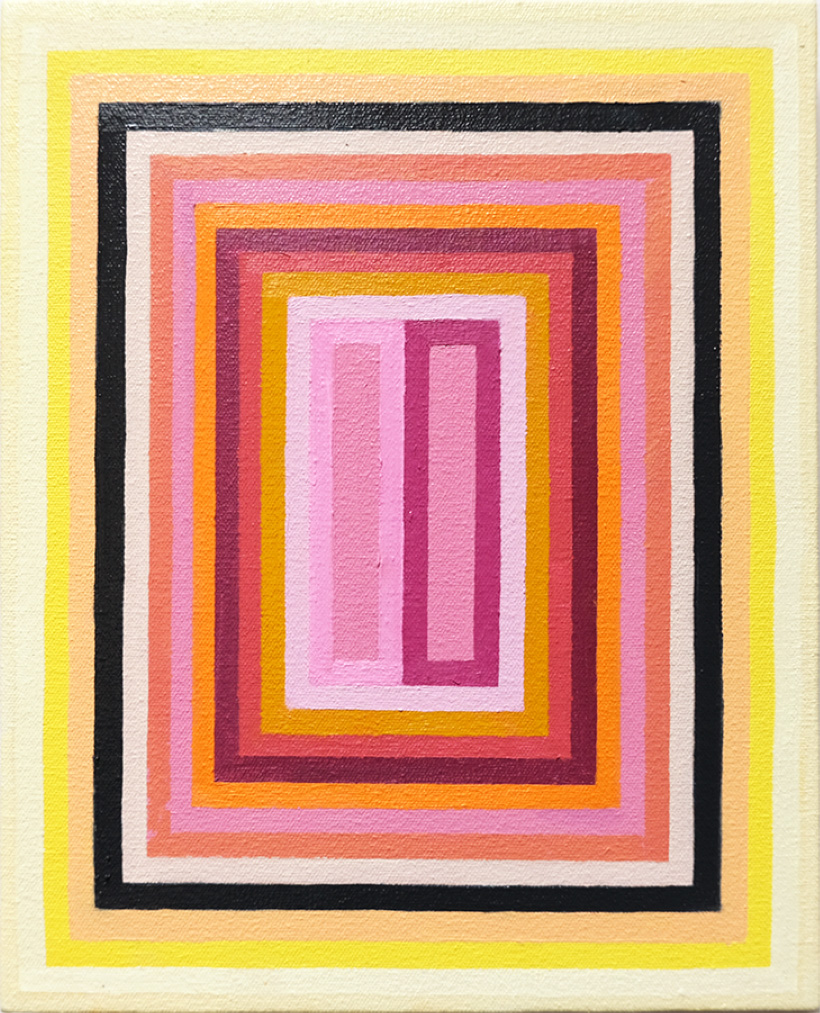
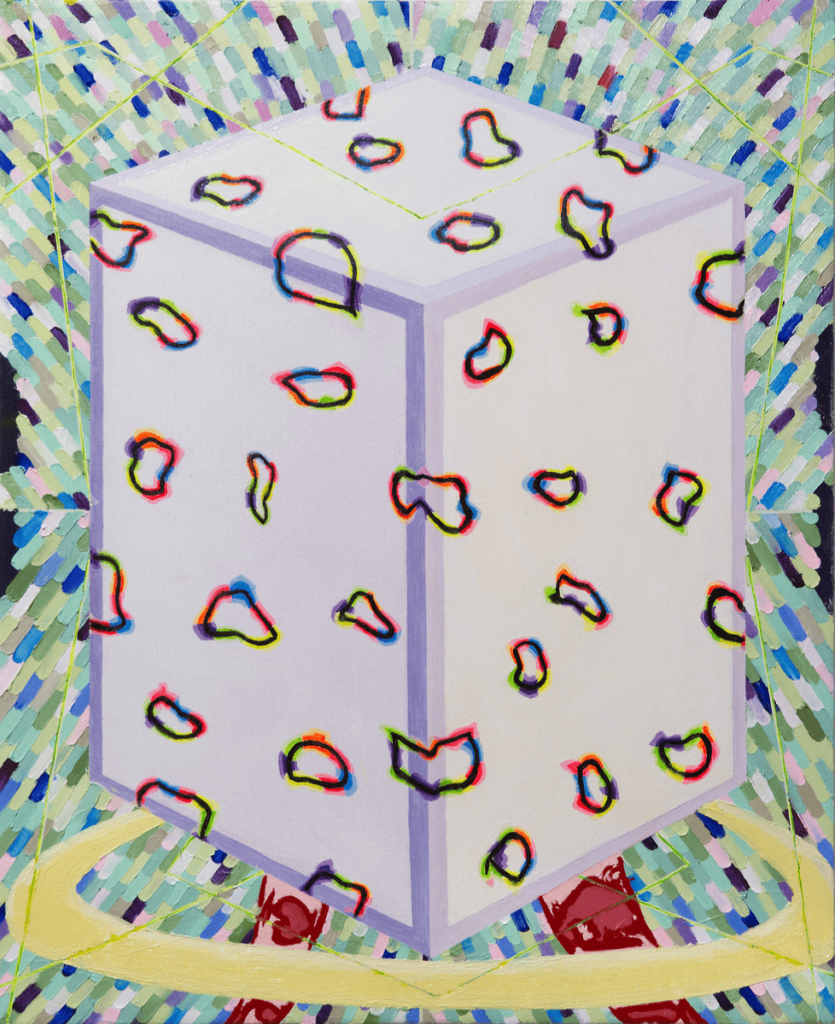
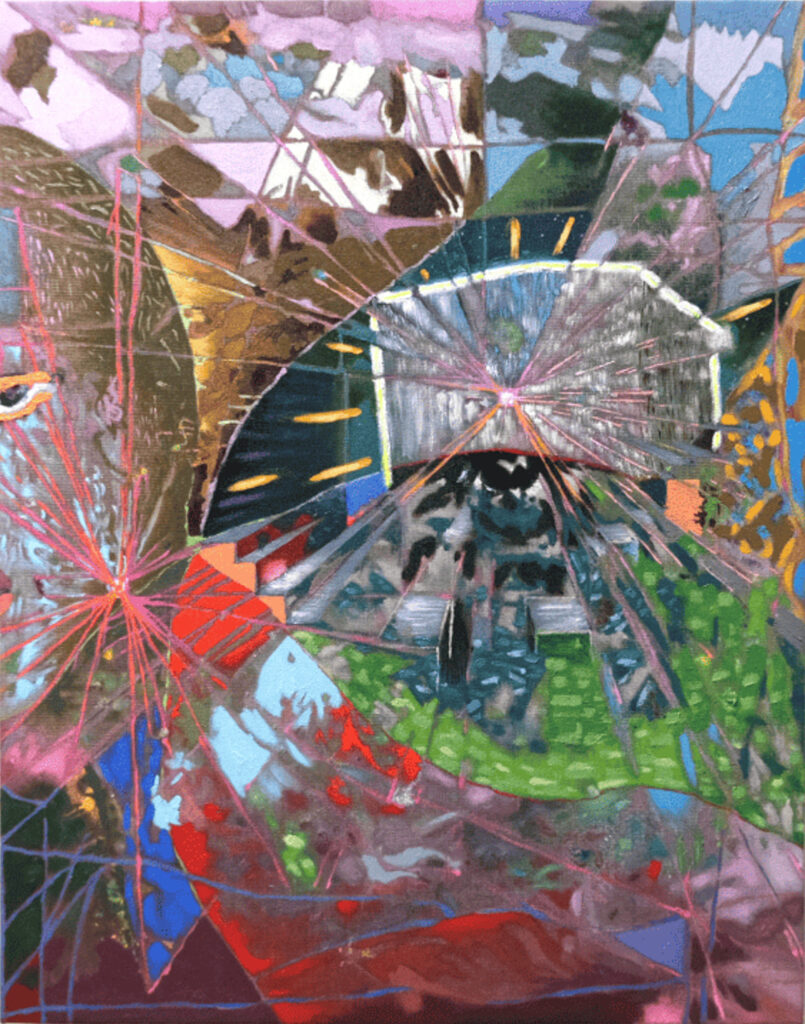
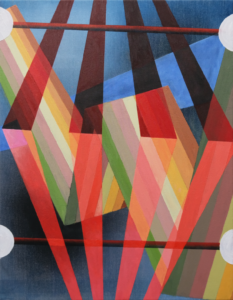
These paintings work inside limits — boxes, cages, panels, or framed fields — to see how much energy can be held without leaking. Many of them were painted in oil, with hard-edged geometric interruptions pushing against looser atmospheric marks. The tension is the point: restraint on the outside, refusal to be quiet on the inside.

Allegories
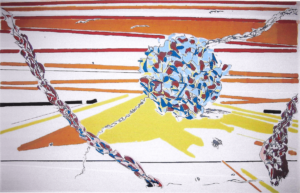
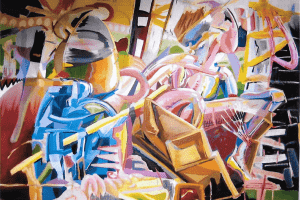
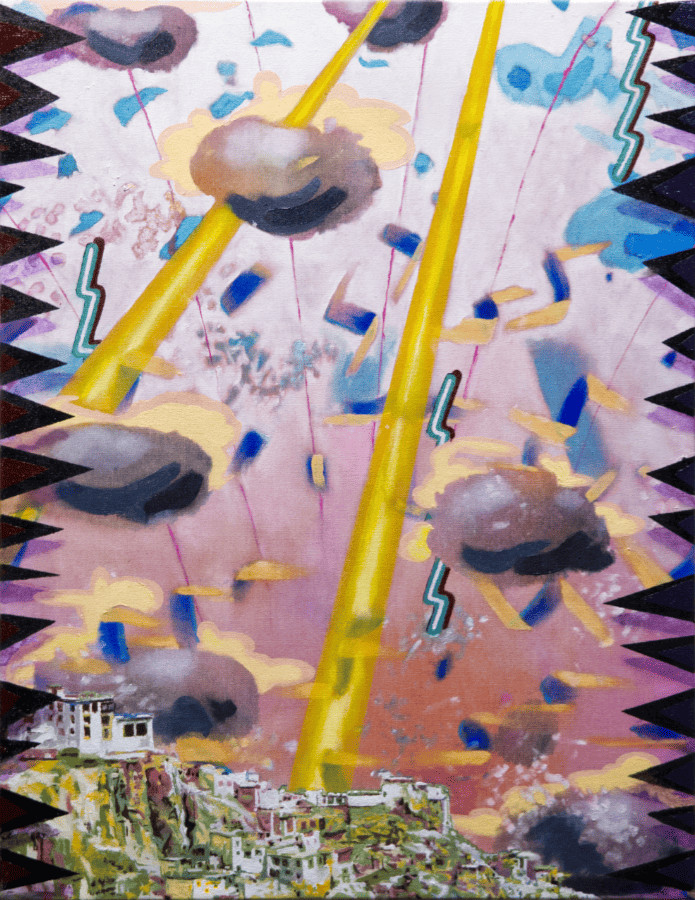
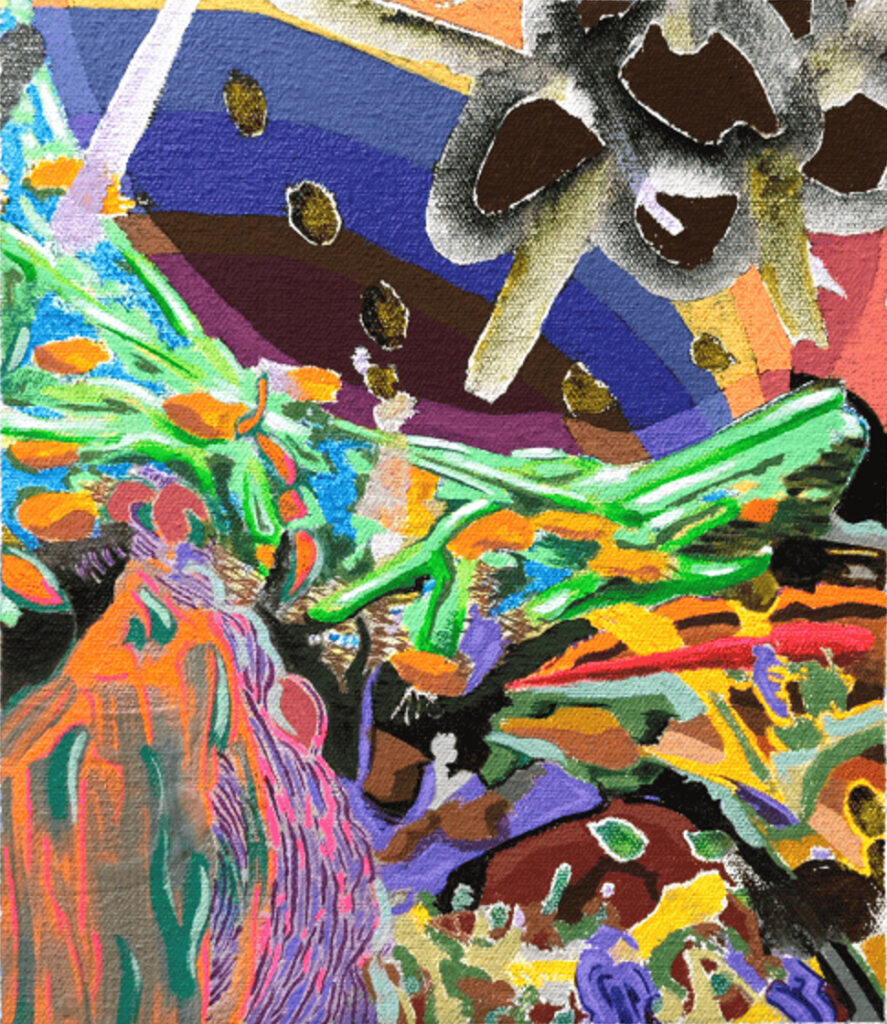
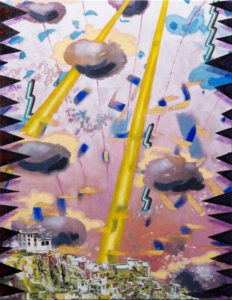
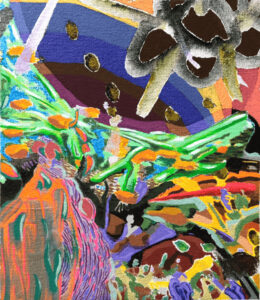
Abstract painting for me is a kind of pareidolia. Once the picture plane is active, figures, objects, and narrative fragments start to appear — not as illustrations, but as signals. The allegorical works leave those apparitions partly open so the viewer can complete them. I try not to spell out what I see; the paintings hold space for multiple readings.
![ministry of defence [working title], full frame, oil on canvas, 93cm X 82cm](https://andycline.art/wp-content/uploads/2023/08/ministry-of-defence-working-title-full-frame_1.png)
Half-Form
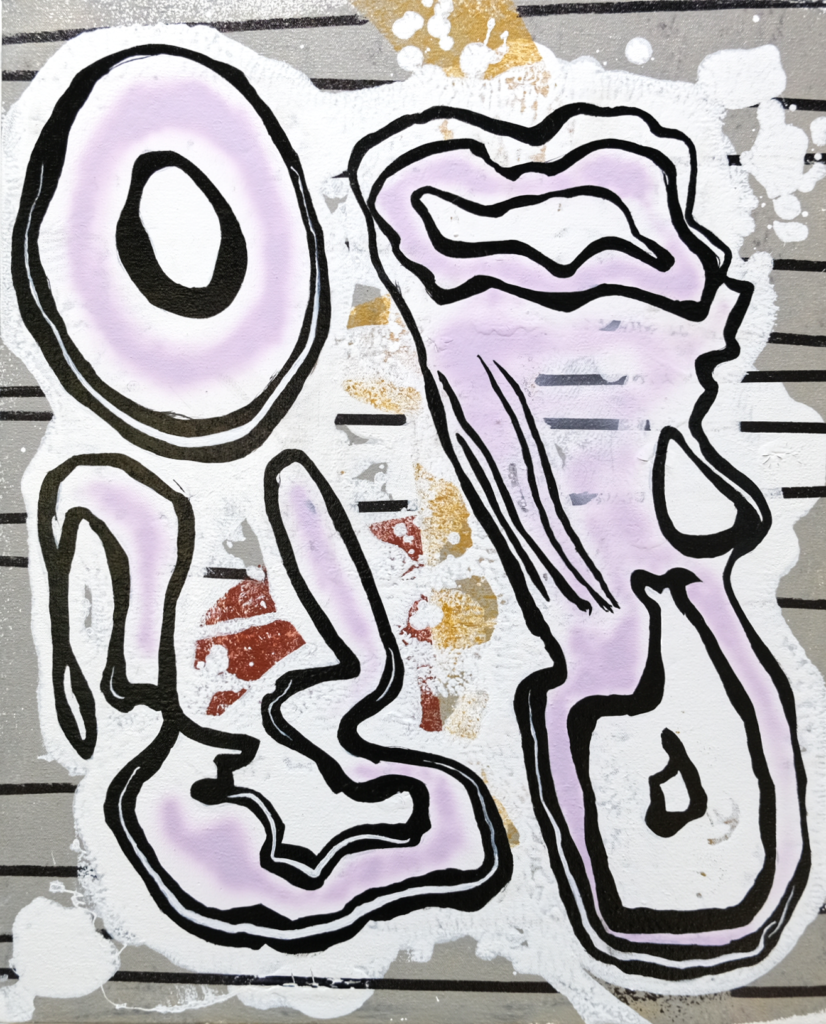
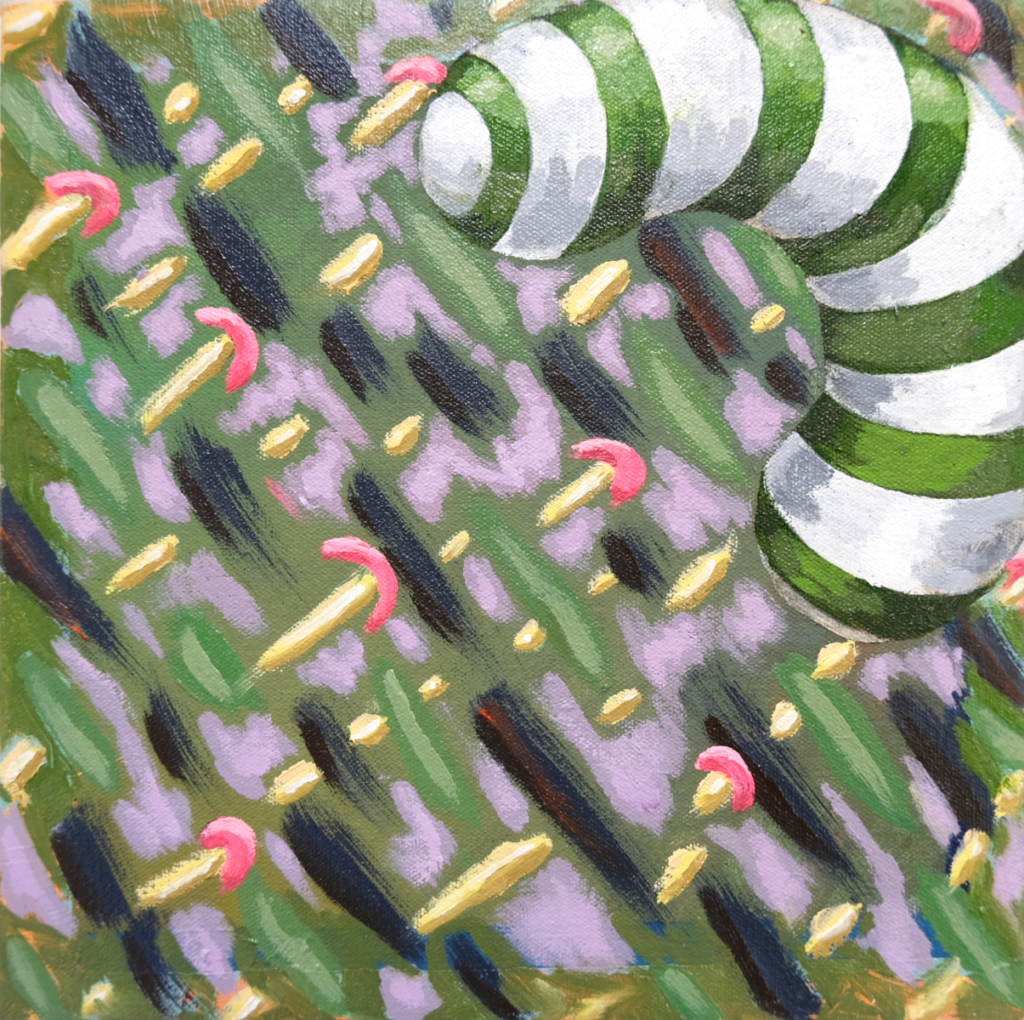
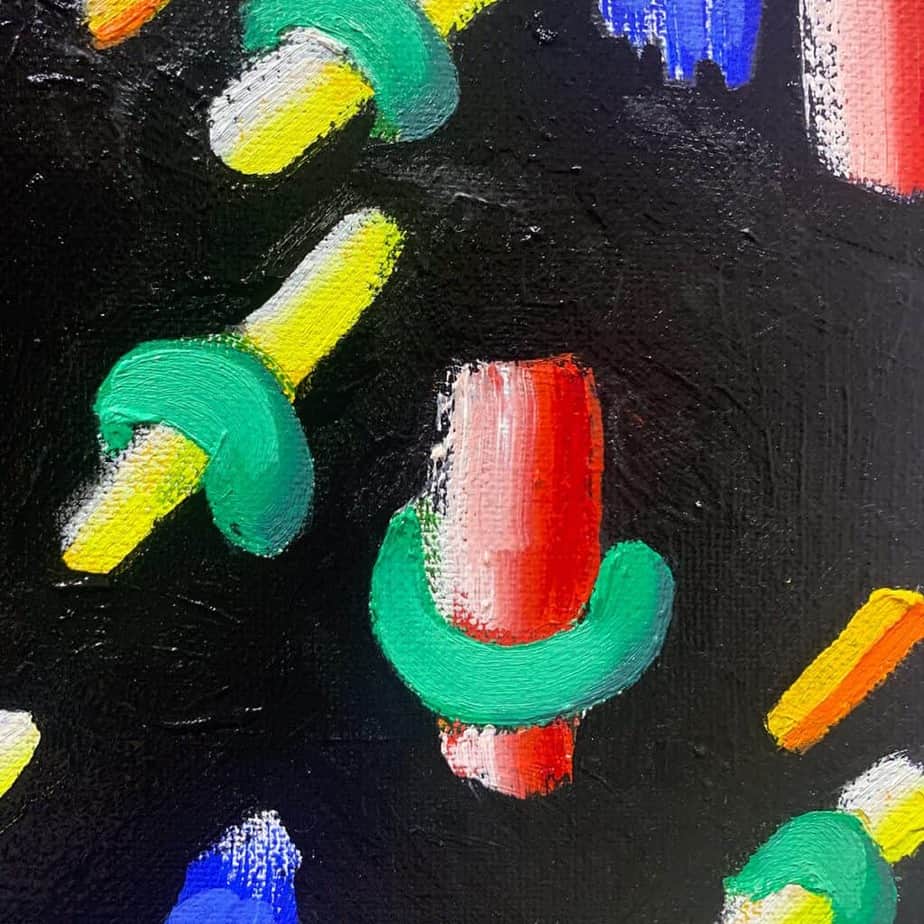
These are painted sketches on leftover canvas — fast arrangements that land somewhere between pattern and figure. Because they begin on scraps, they stay light, provisional, and experimental. I use them to test marks, color stacks, and small systems before they show up in larger works.


Organics
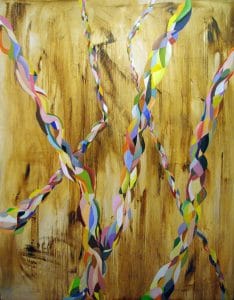
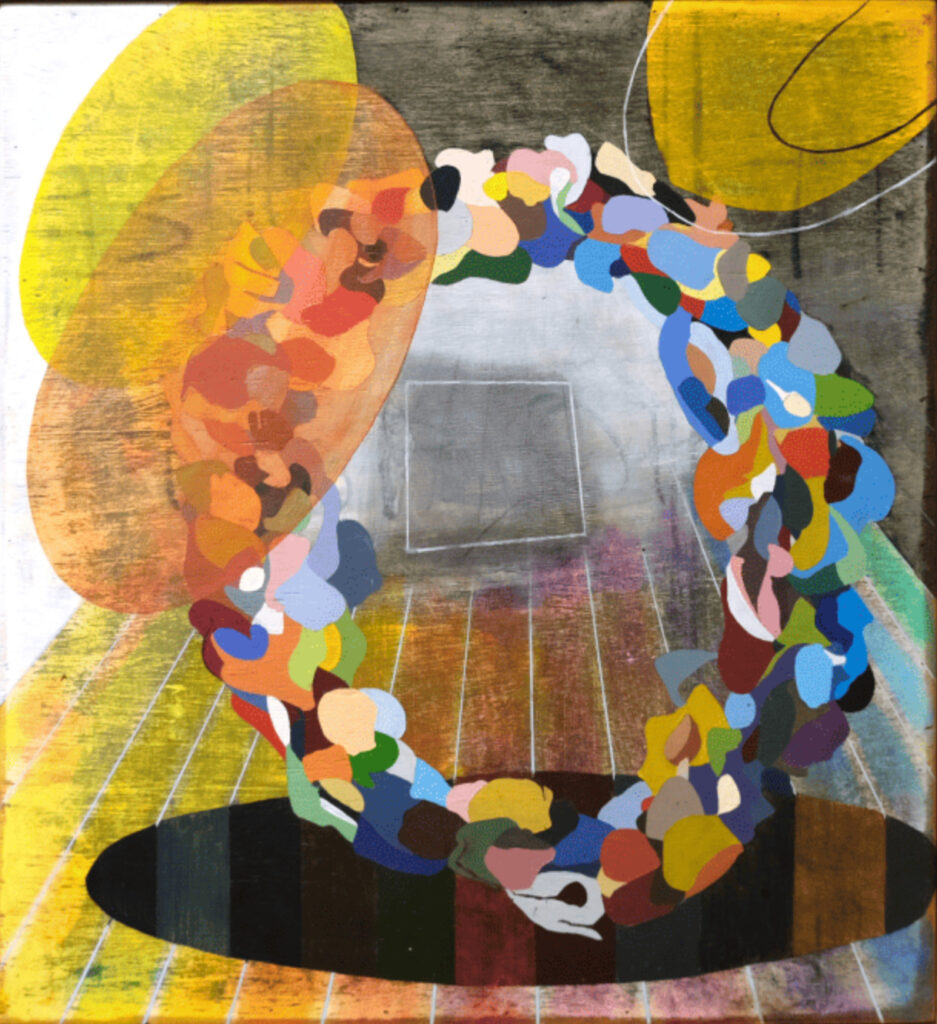
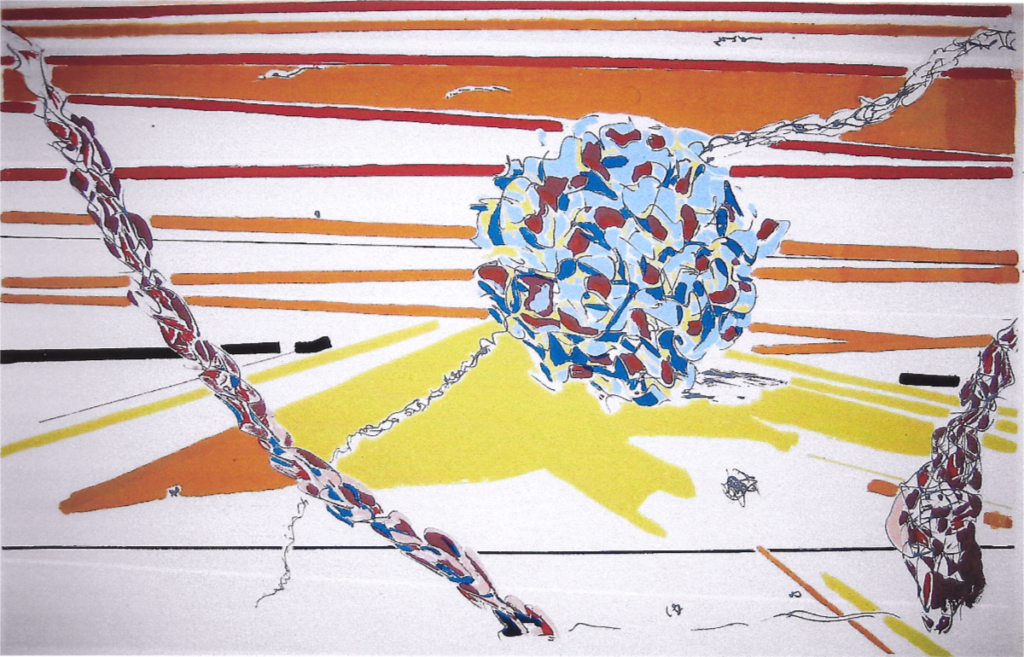
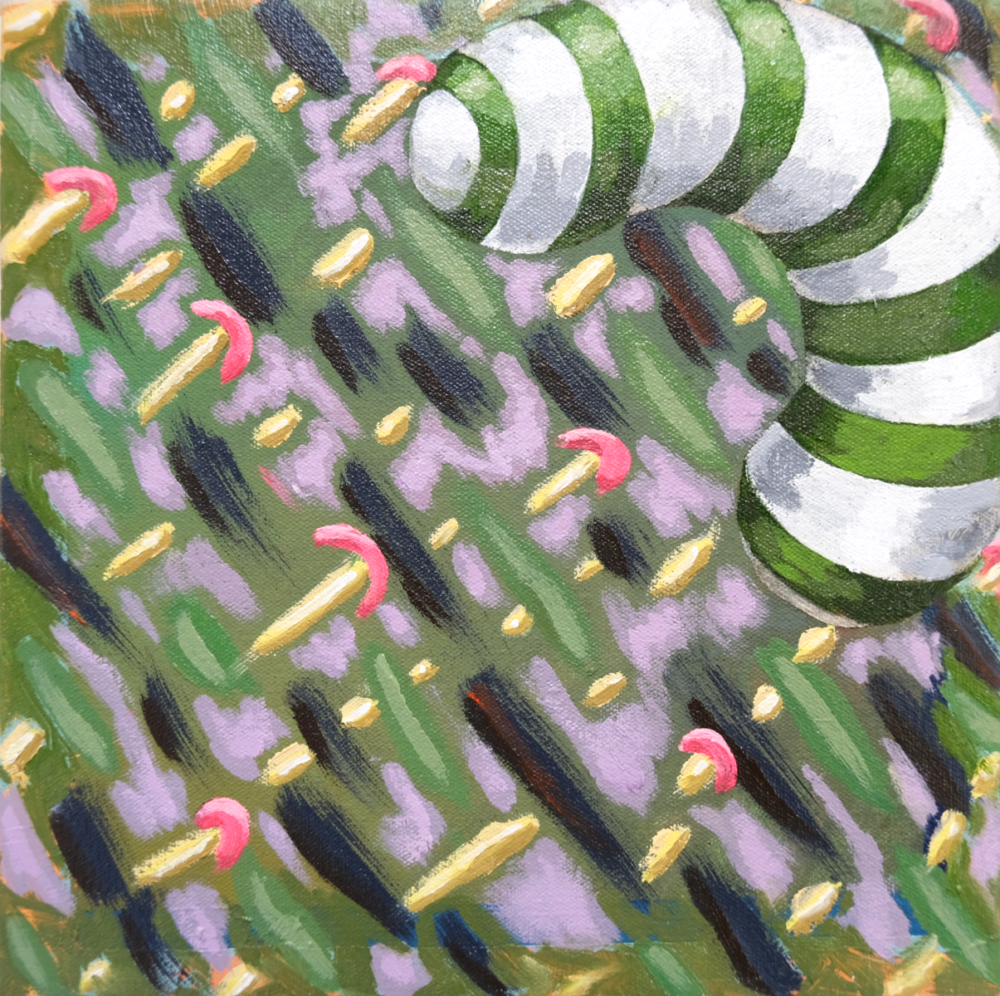
This group comes out of looking at biological systems, cables, cords, and growth patterns — things that braid, knot, or multiply. Early on I was interested in how something synthetic could still feel alive. These paintings mix biomorphic forms with a distinctly constructed color sense, so the image feels both engineered and breathing.


Conceptual Themes
My paintings move through a few recurring lines of inquiry — ways of organizing image, gesture, and narrative suggestion. The groups below aren’t strict series as much as lenses: each one gathers works that share structure, mood, or problem-solving. Together they show how the paintings shift between order and intuition.
Containment
These paintings work inside limits — boxes, cages, panels, or framed fields — to see how much energy can be held without leaking. Many of them were painted in oil, with hard-edged geometric interruptions pushing against looser atmospheric marks. The tension is the point: restraint on the outside, refusal to be quiet on the inside.
Allegories
Abstract painting for me is a kind of pareidolia. Once the picture plane is active, figures, objects, and narrative fragments start to appear — not as illustrations, but as signals. The allegorical works leave those apparitions partly open so the viewer can complete them. I try not to spell out what I see; the paintings hold space for multiple readings.
Half-Form
These are painted sketches on leftover canvas — fast arrangements that land somewhere between pattern and figure. Because they begin on scraps, they stay light, provisional, and experimental. I use them to test marks, color stacks, and small systems before they show up in larger works.
Organics
This group comes out of looking at biological systems, cables, cords, and growth patterns — things that braid, knot, or multiply. Early on I was interested in how something synthetic could still feel alive. These paintings mix biomorphic forms with a distinctly constructed color sense, so the image feels both engineered and breathing.
Conceptual Themes
My paintings move through a few recurring lines of inquiry — ways of organizing image, gesture, and narrative suggestion. The groups below aren’t strict series as much as lenses: each one gathers works that share structure, mood, or problem-solving. Together they show how the paintings shift between order and intuition.
Containment
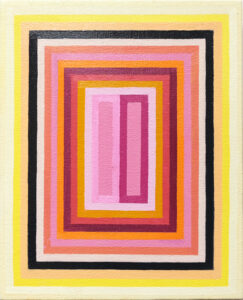
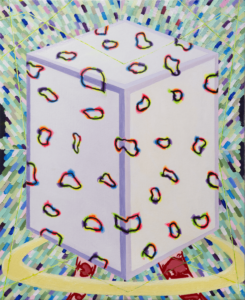
These paintings work inside limits — boxes, cages, panels, or framed fields — to see how much energy can be held without leaking. Many of them were painted in oil, with hard-edged geometric interruptions pushing against looser atmospheric marks. The tension is the point: restraint on the outside, refusal to be quiet on the inside.
Allegories
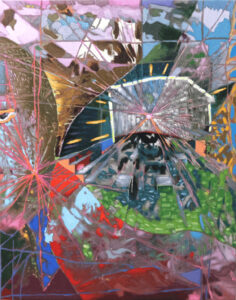
Abstract painting for me is a kind of pareidolia. Once the picture plane is active, figures, objects, and narrative fragments start to appear — not as illustrations, but as signals. The allegorical works leave those apparitions partly open so the viewer can complete them. I try not to spell out what I see; the paintings hold space for multiple readings.
![ministry of defence [working title], full frame, oil on canvas, 93cm X 82cm](https://andycline.art/wp-content/uploads/2023/08/ministry-of-defence-working-title-full-frame_1-265x300.png)
Half-Form
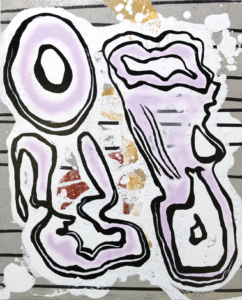
These are painted sketches on leftover canvas — fast arrangements that land somewhere between pattern and figure. Because they begin on scraps, they stay light, provisional, and experimental. I use them to test marks, color stacks, and small systems before they show up in larger works.

Organics
This group comes out of looking at biological systems, cables, cords, and growth patterns — things that braid, knot, or multiply. Early on I was interested in how something synthetic could still feel alive. These paintings mix biomorphic forms with a distinctly constructed color sense, so the image feels both engineered and breathing.